Comparing the Effectiveness of Group Forgiveness Training Combined with Choice Theory and Emotion Management Training on Self-Disclosure and Psychological Distress in Women Affected by Marital Infidelity
Keywords:
Group training for forgiveness based on choice theory, emotion management, self, disclosure, psychological distress, women affected by breaking the marital contractAbstract
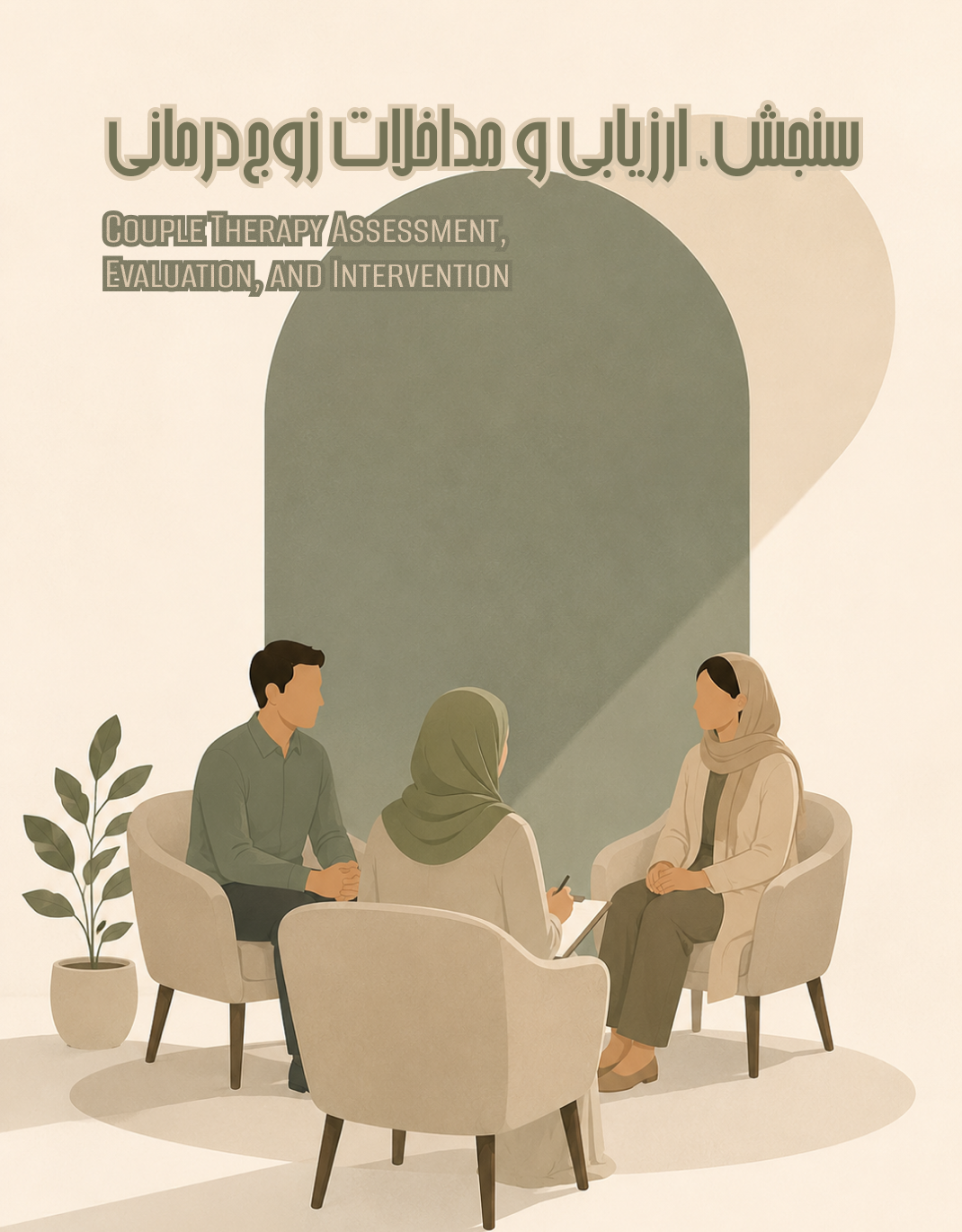
This study aimed to compare the effectiveness of group forgiveness training combined with Choice Theory and emotion management training in improving self-disclosure and reducing psychological distress among women affected by marital infidelity. This applied study employed a quasi-experimental pretest–posttest design with a control group and follow-up assessment. The statistical population consisted of married women affected by marital infidelity who attended a counseling center in District 5 of Tehran Province during 2025–2026. Sixty eligible participants were selected and randomly assigned to three groups of 20: forgiveness training combined with Choice Theory, emotion management training, and a control group. The Choice Theory-based forgiveness intervention consisted of eight 90-minute group sessions, whereas emotion management training comprised ten 90-minute sessions. Data were collected using Snell’s Emotional Self-Disclosure Scale and Kessler’s Psychological Distress Scale and analyzed using repeated-measures analysis of variance and Bonferroni post-hoc comparisons. Multivariate analyses demonstrated significant intervention effects on self-disclosure (Wilks’ λ=0.432, F=14.62, p=0.001, η²=0.343) and psychological distress (Wilks’ λ=0.569, F=9.11, p=0.001, η²=0.245). Significant group×time interaction effects were also observed for self-disclosure (F=18.54, p=0.001, η²=0.394) and psychological distress (F=8.12, p=0.001, η²=0.223). Bonferroni post-hoc analyses indicated that both interventions significantly increased self-disclosure and reduced psychological distress compared with the control condition. Moreover, the effects of the two interventions differed significantly for both self-disclosure (p=0.001) and psychological distress (p=0.011), with forgiveness training combined with Choice Theory producing greater improvements than emotion management training. Group forgiveness training combined with Choice Theory appears to be more effective than emotion management training in enhancing self-disclosure and reducing psychological distress among women affected by marital infidelity. This intervention may therefore represent a useful therapeutic approach for counseling and psychological programs addressing the consequences of marital infidelity.
Downloads
References
Asadu, N., & Egbuche, M. (2020). Effect of marital infidelity on the family: A perception study of Ihe/Owerre in Nsukka Local Government Area of Enugu State. Renaissance University Journal of Management and Social Sciences, 6(1), 21-31.
Bahmani, B., Hosseini, S., & Afsharnia, K. (2022). Effectiveness of reality therapy-based couple therapy on marital conflicts among military couples seeking divorce. Military Caring Sciences, 9(4), 383-390.
Barzgaran, S., Haroun Rashidi, H., & Kazemian Moghaddam, K. (2021). The effect of emotional schema therapy on forgiveness, marital relationship quality, and differentiation in women experiencing spousal infidelity. Journal of Applied Psychological Research, 12(1), 315-332.
Chan, E. W. L., & Tan, H. J. R. (2020). Positive Psychology Couple Schema Therapy: A new model of couple therapy focusing on reigniting couple attraction via schema therapy & positive psychology. Journal for ReAttach Therapy and Developmental Diversities, 2(2), 61-69. https://doi.org/10.26407/2019jrtdd.1.24
Corey, G. (2022). Theory and practice of counseling and psychotherapy (Y. Seyedmohammadi, Trans.; 10 ed.).
Darvishnejad Sikaroudi, A., Asghari, F., Zarbakhsh Bahri, M., & Ghasemzadeh, A. (2024). Comparing the effectiveness of emotion management strategies training based on schema therapy and emotionally focused couple therapy on restructuring couples' communication patterns. Education Strategies in Medical Sciences, 17(4), 419-432.
Ganz, M. B., Rasmussen, H. F., McDougall, T. V., Corner, G. W., Black, T. T., & De Los Santos, H. F. (2022). Emotionally focused couple therapy within VA healthcare: Reductions in relationship distress, PTSD, and depressive symptoms as a function of attachment-based couple treatment. Couple and family psychology: Research and practice, 11(1), 15-32. https://doi.org/10.1037/cfp0000210
Glasser, W. (2021). Choice theory and life management (A. Sahebi, Trans.; 4 ed.). Sayeh Sokhan.
Hashemi Fesharaki, S. S., & Salehi, M. (2026). Comparing Schema Therapy and Cognitive-Behavioral Therapy on Psychological Distress and Forgiveness in Divorced Women Affected by Marital Infidelity. Quarterly Journal of New Psychological Research, 21(81), 148-165.
Heshmati, A., Fakhraein, F., Karimi Majd, T., & Ghaderi, H. (2024). Effectiveness of choice theory-based reality therapy training on marital satisfaction and couples' relationship quality Fifth International Conference on Health, Educational Sciences and Psychology, https://civilica.com/doc/2103135 https://civilica.com/doc/2103135
Khosravi, S., & Ghejavand, K. (2026). Effectiveness of Forgiveness Therapy on Marital Conflicts among Betrayed Women Referring to Counseling Centers in Isfahan. Khomeini Shahr.
Kyegombe, N., Stern, E., & Buller, A. M. (2022). "We saw that jealousy can also bring violence": A qualitative exploration of the intersections between jealousy, infidelity and intimate partner violence in Rwanda and Uganda. Social Science & Medicine, 292, 114593. https://doi.org/10.1016/j.socscimed.2021.114593
Masoumirad, H., Jahangir, P., & Rezakhani, S. (2026). Presenting a Model for Predicting Marital Burnout Based on Experiential Avoidance and Relationship Beliefs with the Mediation of Forgiveness in Married Women Referring to Counseling Centers in Tehran. Applied Family Therapy Journal, 7(1), 1-12. https://doi.org/10.61838/kman.aftj.127
McKay, M., Fanning, P., & Paleg, K. (2023). Marital life skills (S. Mohammadkhani & G. Abedi, Trans.; 7 ed.). Ibn Sina Publications.
Meshaghati Kandari, F. (2020). The relationship of cognitive emotion regulation and academic help-seeking with academic adjustment among university students [Master's thesis, Islamic Azad University, Central Tehran Branch].
Moghimi, R. S. (2023). The relationship of cognitive emotion regulation and mindfulness with psychological well-being among education teachers [Master's thesis, Islamic Azad University, Karaj Branch].
Mollaei, M. (2019). The effect of reality therapy-based group counseling on increasing marital adjustment and happiness among couples [Master's thesis, Islamic Azad University, Science and Research Branch].
Olamijuwon, E., Odimegwu, C., & Chemhaka, G. (2021). Involuntary childlessness and marital infidelity among women in sub-Saharan African countries: An assessment of the moderating role of women's education. Archives of Sexual Behavior, 50(2), 601-614. https://doi.org/10.1007/s10508-020-01770-3
Orek, J., & Kouti, H. (2020). The effect of self-disclosure skills training on reducing depression among female lower secondary school students. New Advances in Psychology, Educational Sciences and Education, 26(1), 165-175.
Poursajjadi, F., & Jarareh, J. (2023). Examining the relationship between emotional expression and its components and mental health among upper secondary school students. New Advances in Behavioral Sciences, 8(56), 588-602.
Sahin, Y., & Sirin, A. (2025). The Mediating Role of Marital Awareness in the Relationship between Empathy, Satisfaction and Forgiveness in Marriage. Harran Maarif Dergisi, 10(1), 90-107. https://doi.org/10.31464/harranmaarif.1472036
Towner, E., Grint, J., Levy, T., Blakemore, S. J., & Tomova, L. (2022). Revealing the self in a digital world: A systematic review of adolescent online and offline self-disclosure. Current opinion in psychology, 101309. https://doi.org/10.1016/j.copsyc.2022.101309
Wiederhold, B. K., & Riva, G. (2019). Virtual reality therapy: Emerging topics and future challenges. Cyberpsychology, Behavior, and Social Networking, 22(1), 3-6. https://doi.org/10.1089/cyber.2018.29136.bkw
Wittenborn, A. K., Liu, T., Ridenour, T. A., Lachmar, E. M., Mitchell, E. A., & Seedall, R. B. (2019). Randomized controlled trial of emotionally focused couple therapy compared to treatment as usual for depression: Outcomes and mechanisms of change. Journal of marital and family therapy, 45(3), 395-409. https://doi.org/10.1111/jmft.12350
Wubbolding, R. W. (2019). The relationship between professional diversity/multicultural guidelines and choice theory/reality therapy. International Journal of Choice Theory and Reality Therapy, 38(2), 36-42.
Yokotani, K. (2018). Advantage of empty-chair dialogue over emotion-focused couples therapy for a Japanese couple with marital infidelity: A case study. International Journal of Brief Therapy and Family Science, 8(1), 34-48. https://doi.org/10.35783/ijbf.8.1_34
Zanganeh Parsa, F., & Habbi, M. (2020). Testing the mediating role of cognitive flexibility in the relationship between psychological capital and distress tolerance among couples experiencing marital infidelity. Women and Family: Scientific, Cultural and Educational Journal, 15(53), 105-123.
Downloads
Publication Timeline
- Submitted
- Revised
- Accepted
Issue
Section
License
Copyright (c) 2025 Nahid Mohammadalizadeh (Author); Mehryar Anasseri (Corresponding author); Margam Ghahremani, Mahnaz Askarian (Author)

This work is licensed under a Creative Commons Attribution-NonCommercial 4.0 International License.